
IOP for Anxiety: Clinical Insights into Intensive Outpatient Mental Health Care
- Samantha Leonie


Anxiety disorder is one of the most common mental health conditions. According to the National Institute of Mental Health, nearly 1 in 3 U.S. adults experience anxiety at some point in their lives. For many people, anxiety is not just feeling stressed but a condition that can shape every part of their life. Anxiety may significantly affect overall well-being-physically, emotionally, and psychologically.
Anxiety recovery is not a single day event, it takes time and healing happens in stages. The recovery process or treatment may require different levels of care depending on the severity of the condition and standard weekly therapy may not always provide enough support. That is where an IOP for anxiety, an extensive anxiety treatment program steps in. An intensive outpatient program delivers structured, clinically guided care several times per week while still allowing you to return home in the evening and maintain your everyday commitments.
Understanding IOP for anxiety involves how it works, who it is designed for, and what makes it different from other levels of care. This blog walks through the clinical framework of intensive outpatient care, the therapeutic tools used, and what recovery from anxiety can realistically look like when someone engages with the right treatment.
Table of Contents

Patient Eligibility for An Intensive Outpatient Program for Anxiety
Not everyone who struggles with anxiety needs an IOP. The decision to enroll in IOP for anxiety is based on a clinical assessment that considers symptom severity, functional impairment, and prior interventions. Generally, an individual may be considered for an intensive outpatient program when:
- Anxiety symptoms are significantly disrupting work, relationships, or self-care
- Weekly outpatient therapy has not produced adequate relief
- The individual does not require 24-hour supervision or inpatient medical stabilization
- There is a need to engage with structured peer support programs

Core Components of Outpatient Therapy for Anxiety in Intensive Outpatient Programs
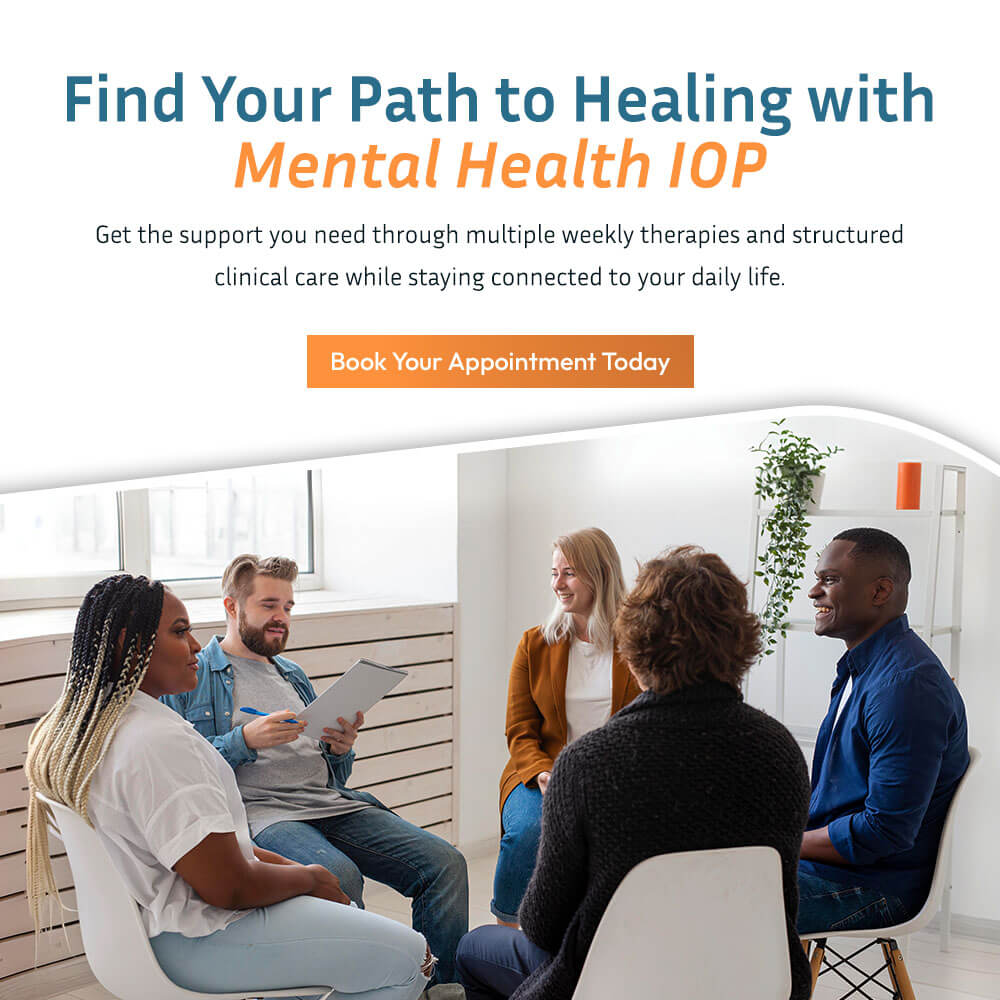
A well-structured program is not about therapy sessions stacked together; it is a coordinated system of care that addresses anxiety from multiple angles simultaneously. IOP for anxiety provides structured support with multiple therapeutic services in a week. Programs typically run three to five days per week, for three or more hours per session, making them a meaningful commitment that falls between standard outpatient therapy and a residential program.
An IOP for anxiety offers:
- Group therapy
- Individual therapy
- Peer support programs
- Family therapy (if required)
- Coping strategies & skill training programs
- Medication management when clinically appropriate
These programs help you understand anxiety patterns, learn to cope with them, and build strength to deal with challenging situations calmly and effectively.

Therapeutic Approaches Used in an Anxiety IOP and Behavioral Health Programs
The treatment methods used in an anxiety IOP vary from patient to patient. Our expert mental health team designs a treatment program based on evidence-based modalities depending on the patient’s diagnosis, history, and goals.
The most commonly used approaches for outpatient therapy for anxiety include:
Anxiety does not come in just one form, and effective treatment should not either. An outpatient therapy for anxiety is based on multiple therapeutic frameworks that cover diverse needs of the people it serves.

Intensive Outpatient Program for Depression and Co-Occurring Anxiety Conditions
It is unusual to see anxiety exist alone. In clinical settings, anxiety and depression frequently co-occur, and treating one without addressing the other often leads to incomplete recovery. When a patient comes for an intensive outpatient program for depression alongside anxiety, the clinical team thoughtfully handles both conditions. Depression can affect motivation and reduce engagement with behavioral interventions that work well for anxiety. At the same time, the helplessness and withdrawal associated with depression can reinforce the avoidance patterns that keep anxiety disorders active.
Programs that are equipped to address both will typically:
- Use screening tools to identify depressive symptoms alongside anxiety disorders at intake
- Incorporate behavioral activation strategies alongside exposure-based anxiety work
- Adjust pacing and expectations based on the patient’s energy and mood
- Coordinate closely between therapist and prescriber when both anxiety and depressive symptoms require medication consideration
An intensive outpatient program for depression with anxiety, the dual-focus approach does not simply mean running two separate treatment tracks at once. It means recognizing how these conditions are intertwined and using that understanding to guide the clinical work in a more integrated way. Integrating an intensive outpatient program for depression within this framework may improve outcomes for both anxiety and depression.


Benefits of an Outpatient Anxiety Program for Long-Term Emotional Stability
One of the most meaningful advantages of IOP for anxiety is that recovery happens within real life. When an individual works on their anxiety while fulfilling their responsibilities, managing their home, relationships, and work pressures, the coping strategies and skills they build can easily be applied, tested, and reinforced.
Some of the lasting benefits that people report from engaging in IOP for anxiety include:
- Greater confidence in managing anxiety symptoms without constant professional oversight
- Improved relationships, as anxiety often strains how people communicate and connect with others
- Reduced reliance on avoidance behaviors that, while temporarily soothing, tend to make anxiety worse over time
- Better sleep, appetite, and overall physical health, as chronic anxiety has measurable effects on the body
- A stronger sense of self-efficacy, a true belief that you can handle difficult situations without being overwhelmed
The outpatient treatment for anxiety also helps normalize seeking support and reduce stigma. People who complete an anxiety IOP often leave with a more realistic understanding of what good mental health maintenance looks like, not the absence of difficult feelings, but the capacity to move through them.

Care Progression and Treatment Outcomes in an IOP for Anxiety
Treatment at the intensive outpatient level is not indefinitely open-ended. There is a general expectation of progression, and the pace of that progression is closely monitored by the clinical team.
A typical course of care in an IOP for anxiety might look like this:
- Weeks one to two: Stabilization, psychoeducation, and building rapport with the treatment team
- Weeks three to five: Active skill-building, beginning exposure work, or other targeted interventions
- Weeks six to eight (and beyond, as needed): Consolidating gains, addressing setbacks, and preparing for step-down to standard outpatient care
Progress is measured through clinician observations, standardized symptom scales, self-report, and functional markers. For individuals who need a higher level of structure before stepping down to IOP for anxiety, a Partial Hospitalization Program (PHP) may serve as an intermediate option, which provides full-day treatment while allowing you to return home at night.

Evidence-Based Practices in Intensive Outpatient Program for Anxiety
The outpatient treatment for anxiety varies from person to person according to the severity of the patient’s condition and their unique needs. However, the core elements of an anxiety treatment program are grounded in evidence-based practices that have been tested, refined, and shown to produce results.
Key evidence-based practices you should expect from a quality outpatient anxiety program include:
- Exposure and Response Prevention (ERP): The outpatient anxiety program for anxiety and certain phobia-related conditions involves structured exposure to feared stimuli with proper monitoring to resist compulsive or avoidant responses
- Trauma-Informed Care: For anxiety that has roots in past experiences, a trauma-sensitive approach prevents retraumatization and creates the psychological safety necessary for therapeutic progress
- Structured Care: The use of validated symptom scales such as the screening tools GAD-7 or PHQ-9 at regular intervals by the clinical team to track progress and make data-informed decisions.
- Peer Support Integration: Group therapy a therapeutic intervention in an IOP is not merely logistical. It helps to connect with others who share similar struggles. The goal is to reduce shame, build resilience, and reinforce new coping skills

Mental Health Recovery Support Through Outpatient Treatment for Anxiety in Dallas-Fort Worth
Anxiety struggles don’t need to be a battle fought alone when, Rise Well Behavioral provides personalized and intensive outpatient program for anxiety in Dallas-Fort Worth. Our team of mental health experts stand by you with structured care and holistic support to help you manage anxiety with long-term recovery. In our outpatient anxiety program, you will find:
- Licensed clinicians who specialize in treating anxiety disorders and co-occurring conditions
- A continuum of care that allows for smooth transitions between PHP, IOP, and standard outpatient services
- Scheduling options that accommodate work and family obligations
- An individualized treatment plan that reflects well with your specific diagnosis, history, and goals
- A commitment to measure recovery outcomes and adjust further care based on how you are actually doing
Recovery from anxiety is not about achieving a life without fear or discomfort. It is about building the skills, insight, and resilience to deal with such situations. Outpatient treatment for anxiety is designed to support recovery while allowing individuals to maintain many of their daily responsibilities.
FAQ for Anxiety IOP
Individuals experiencing ongoing anxiety symptoms that interfere with daily life may benefit from outpatient treatment for anxiety. It can be helpful for those who need consistent support but do not require 24/7 care.
Anxiety IOP provides flexible sessions that help patients to adjust their school, work, or family responsibilities. Rise Well Behavioral offers morning and evening sessions. For example, if you enroll in an evening IOP, you can manage your other activities in the morning.
Progress in an IOP for anxiety is tracked through a combination of clinician observations during individual and group sessions. Treatment goals are set collaboratively at the start of the program and reviewed on an ongoing basis. When someone is not progressing as expected, the clinical team adjusts the approach for a better recovery.
Regular sleep, consistent physical activity, a reasonably stable nutrition routine, and limiting caffeine and alcohol may reduce anxiety symptoms. Having a supportive social network, or working to build one, also aids in recovery.
The individual whose condition is severe and requires more than weekly therapy support is the ideal candidate for IOP for stress and anxiety. An IOP may be appropriate for:
- Persistent overwhelming symptoms that start interfering with your daily life.
- Difficulty managing work, relationships, and family responsibilities due to anxiety.
- Patients who step down from residential treatment and require constant support to prevent relapse.
Conclusion for Anxiety IOP
Anxiety disorder responds well to treatment. Many people spend years managing it alone or with only minimal support. An IOP for anxiety offers a meaningful path in anxiety management and recovery. As a structured and comprehensive alternative to weekly therapy, people with anxiety may avail it without the need for inpatient or residential care.
If you or your loved one is struggling with anxiety and weekly therapy has not worked well, it is high time to opt for a more structured yet convenient anxiety treatment in DFW. The right intensive outpatient program, such as the one at Rise Well Behavioral, is one that meets you where you are. The program will help you grow and give you the tools to sustain the growth even after the treatment.
Note: If you or someone you know is struggling with severe anxiety, depression, or other mental health conditions, seeking treatment is important.
In case you experience suicidal or self-harm thoughts, consult with the nearest mental health emergency department or contact 988 Suicide & Crisis Lifeline for immediate help.
Revision History
Author

Samantha Leonie
Medical & Clinical Educator
Samantha Leonie is a healthcare professional and medical content writer with experience in clinical training and academic writing. She specializes in creating research-based, accessible healthcare content. With a foundation in medical education and hands-on clinical practice, she brings depth and clarity to every piece she writes. Passionate about making medical knowledge understandable, she aims to educate and inspire her readers.
Fact Checker

Dr. Seema Kazi
Medical Director
Dr. Seema Kazi is the compassionate force behind Rise Well Behavioral, where her vision has shaped a practice rooted in empathy, excellence, and patient-centered care.